
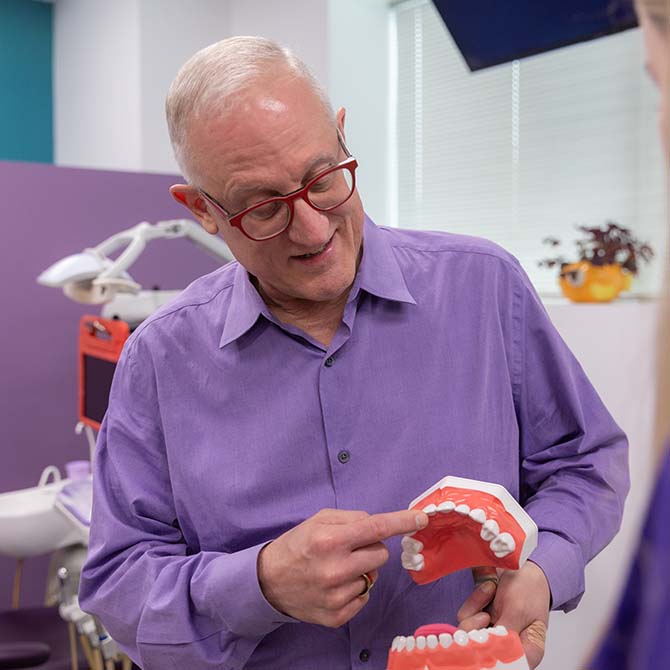
Special needs, again, just like the anxious child, we have to take each individual patient on a one-on-one basis and figure out what makes them mad, what makes them happy. Sometimes it’s singing. We have movies playing all day long and my favorite movies are the ones with music in the background that I can sing to. And sometimes it’s an iPad that they just like watching the same video over and over.
We have weighted blankets. Sometimes it’s a weighted blanket because they like that heavy feeling. Sometimes it’s turning off the lights. We have dimmers in all our rooms. Sometimes it’s background noise, so we have white noise available as well. We have those baby heart booming sounds as well. We have stuffed animals that the kids can hold onto if they didn’t bring their own. So, it’s a matter of trying to figure out what it is that’s gonna make that patient feel more comfortable.
What I do try to stress, and I emphasize with the parents of patients who are special needs, is that they will be with us for as long as the practice is in existence. That as long as I can, and Dr. Kollmann can continue to take care of them and take care of their needs, then they won’t have to worry about finding a new dentist. Because for a patient who has sensory or autistic or any other factor that might make them more anxious of going to the dentist, it’s hard to move from one place to the next place, and hard to get used to someone new since they’re so used to routine. Even if it’s just every six months, it’s still a routine. It’s somewhere they’re used to.
I think Dr. Kollmann had spoke about that we have a family of two patients, and when we changed offices, one of the siblings, they were twins. One of the siblings had a hard time coming back into this office. So, at one point we did their cleaning in the waiting room at lunch before any other patients came in. Another time we tried to get him through the back door, he wouldn’t come, but we finally got him into one of the private rooms where we usually see the infants, but he likes to sit on the couch.
So, now we’re able to clean his teeth sitting on the couch. So, I’m hoping pretty soon we’ll be able to get him to the dental chair, but if we don’t ever get him to the dental chair, he’ll at least be able to get his teeth checked and cleaned. And we want those families to know that they’ll be with us till we can treat them. I have some patients that are as old as me.
Bring Your Child to Us for Special Needs Care in Lincolnwood, IL
Every child deserves a healthy smile and top-notch dental care. We recognize that some children need specialized care that only an experienced dentist can provide. At Dentistry for Kids, we are dedicated to supporting kids with unique challenges with our special needs care in Lincolnwood, IL.
Our approach will:
- Help your child become comfortable with the dentist from a young age
- Address your child’s unique dental care requirements
- Consider your child’s medical history in our treatment plans
- Ensure your child feels at ease in our office and with our staff
- Maintain and enhance your child’s healthy and beautiful smile
Call us today at 773-985-1515 for compassionate dental care. No insurance? Ask about our in-house membership club.
Give Your Special Needs Child the Care They Deserve
Our team is trained to provide dental care for children who use wheelchairs or walkers, have conditions such as autism or Down syndrome, or have injuries requiring special attention. We can allocate extra time, use specific rooms, and make other preparations to ensure a smooth visit on the day of their appointment.
Here’s what you can expect for your child’s appointment:
- Before the official appointment, we can arrange a preliminary visit to help your child become familiar with our office.
- We’ll gather detailed information about your child’s dental and overall health, including the eruption of their first tooth and their current oral care routine.
- Once your child feels comfortable, we’ll perform a comprehensive cleaning and exam. Our team removes plaque and tartar and checks for cavities, gum disease, and other oral health concerns.
- After the cleaning and exam, your dentist will provide treatments, if necessary. They may also make recommendations for follow-up care. If there are no further issues, we’ll schedule their next appointment in six months.
For special needs care in Lincolnwood, IL, call Dentistry for Kids today at 773-985-1515 for an appointment. You can also request an appointment online.
Special needs dentistry treats patients with cognitive, physical, medical, or developmental needs that require special care and attention during dental appointments. A dentist with training in special needs dentistry can make accommodations that focus on treating the patient within their personal limitations. Our dentists have special training in this area.
Whatever your child’s special needs, we can accommodate them to make sure they have a comfortable appointment. We can give them extra time to meet the staff and become familiar with our office before the appointment begins. In addition, we can recommend ways to maintain the health of their smile, address any dental problems caused by medication, and recommend teeth cleaning and gum care tips you can practice at home.
Certain liquid medicines for kids have a syrup base that has added sugar. If the medication isn’t properly rinsed out or brushed off your child’s teeth, it can result in cavities. Other medications can have side effects such as dry mouth or a reduction in saliva. This can lead to dental problems, since saliva washes away food particles and bacteria.